Learn Polo
A beginner’s guide to the history, rules, rhythm, and basic strokes of polo.
One of the world’s oldest team sports.
Polo is one of the world’s oldest team sports, with origins stretching back more than two thousand years to ancient Persia, where it began as a cavalry training exercise.
The sport later developed through the Indo-Pakistan subcontinent, where it was adopted by the British in the mid-nineteenth century. By the late nineteenth century, polo had reached Britain, the United States, and Argentina. Today, polo is played across the Americas, Europe, Asia, Australia, and parts of Africa.
How the game is played.
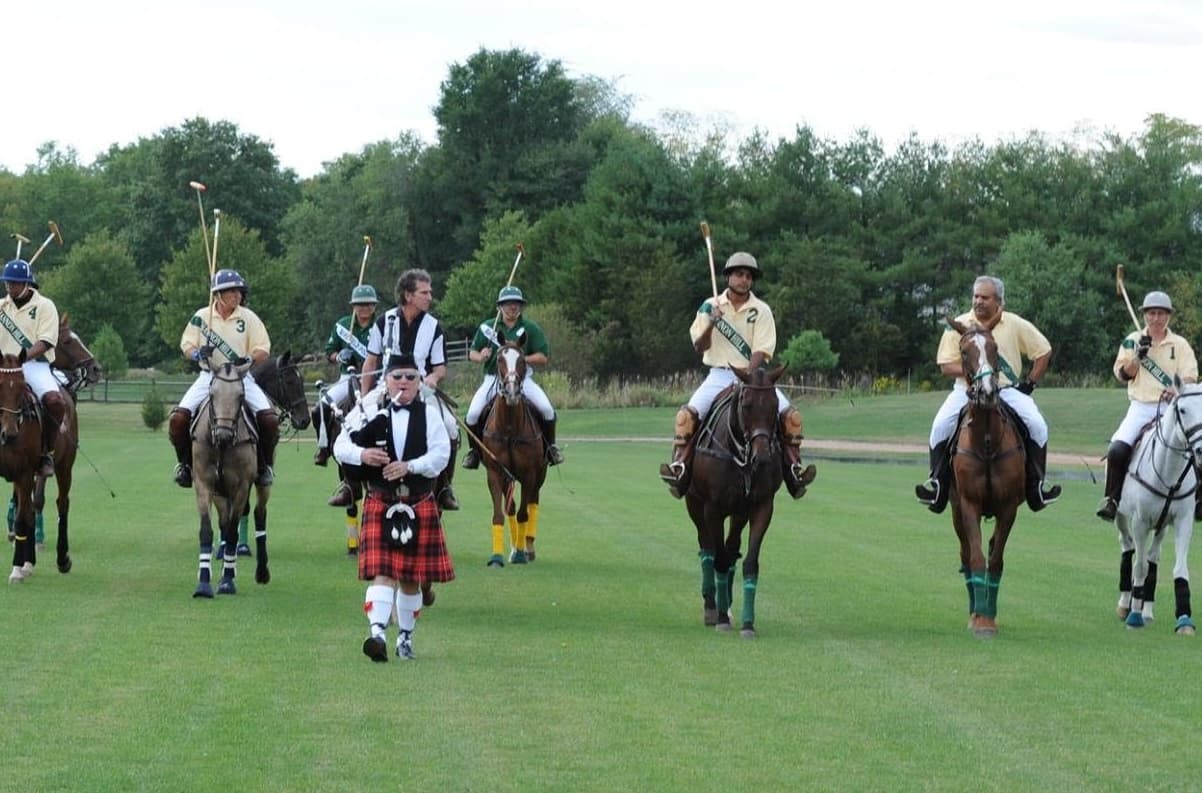
Classically, polo is played on horseback on a grass field with goal posts at each end. Each team has four players, and the objective is simple: move the ball down the field and score more goals than the opposing team.
A match is divided into periods called chukkers. Riders carry a mallet in the right hand and use timing, field awareness, teamwork, and horsemanship to move the ball while staying safe around other horses and players.
Although polo is fast and exciting, the sport is governed by strict rules designed to protect both horse and rider. Learning proper positioning, control, and awareness is an essential part of becoming a polo player.
The rhythm of the game.
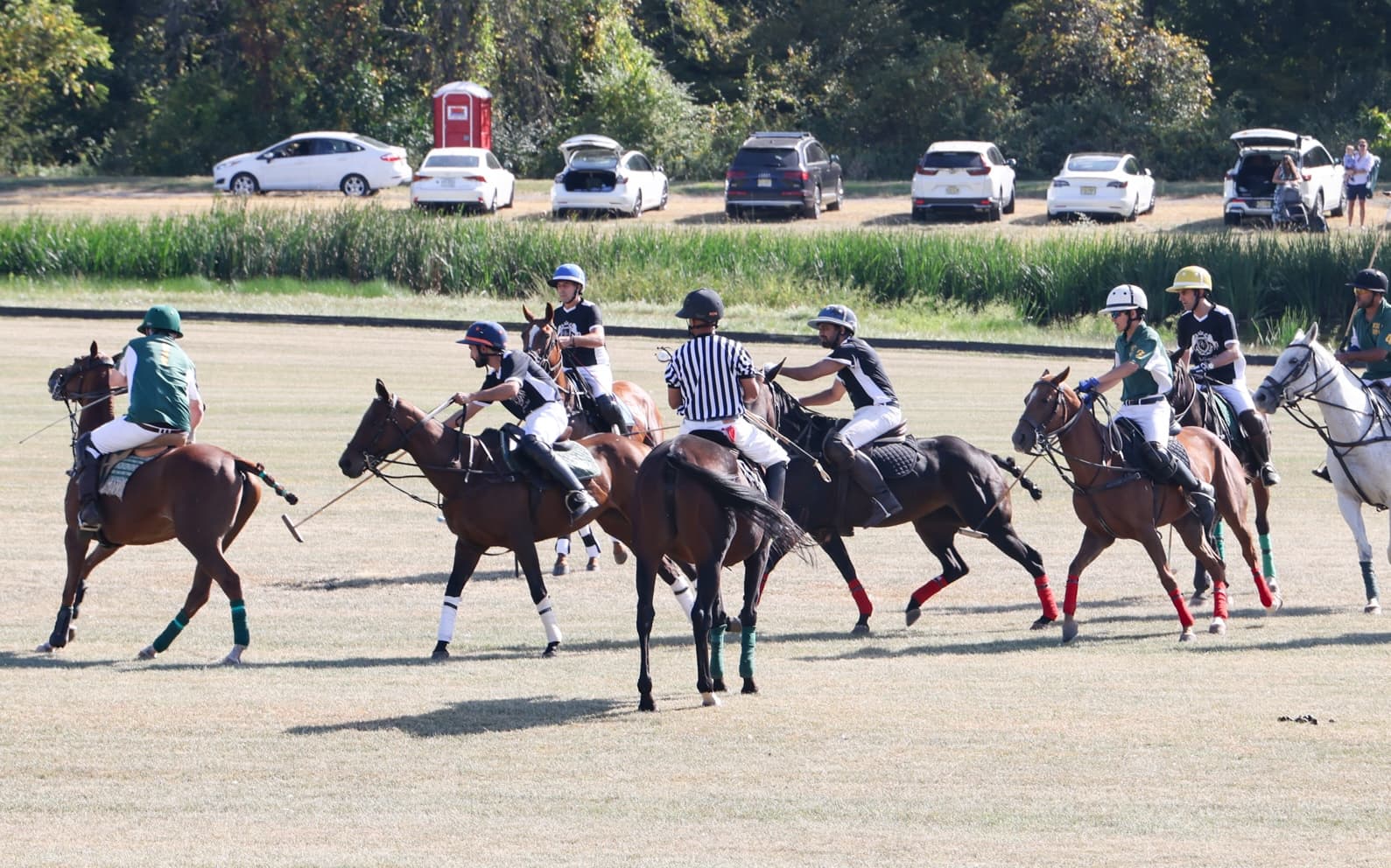
Polo is not only about hitting the ball. Riders must understand the movement of the horse, the direction of play, the position of teammates, and the safest line to the ball.
Beginners first learn balance, control, and horsemanship before moving into faster play. As riders improve, they begin to understand how the ball, horse, field, and team all work together.
The Strokes of Polo.
Polo is played with the mallet held in the rider’s right hand. The two basic stroke families are the forehand and the backhand, each of which can be played on either side of the horse.
For beginners, the four core strokes are the foundation of mounted mallet work.
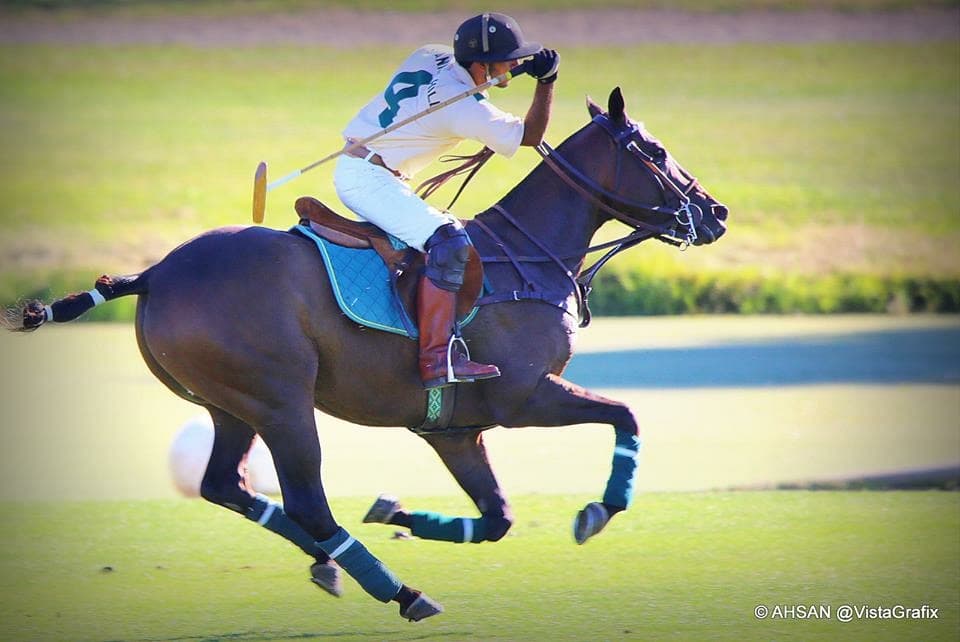
Offside Forehand
A forward stroke made on the rider's right side. This is often one of the first strokes a beginner learns because it follows the natural direction of play.
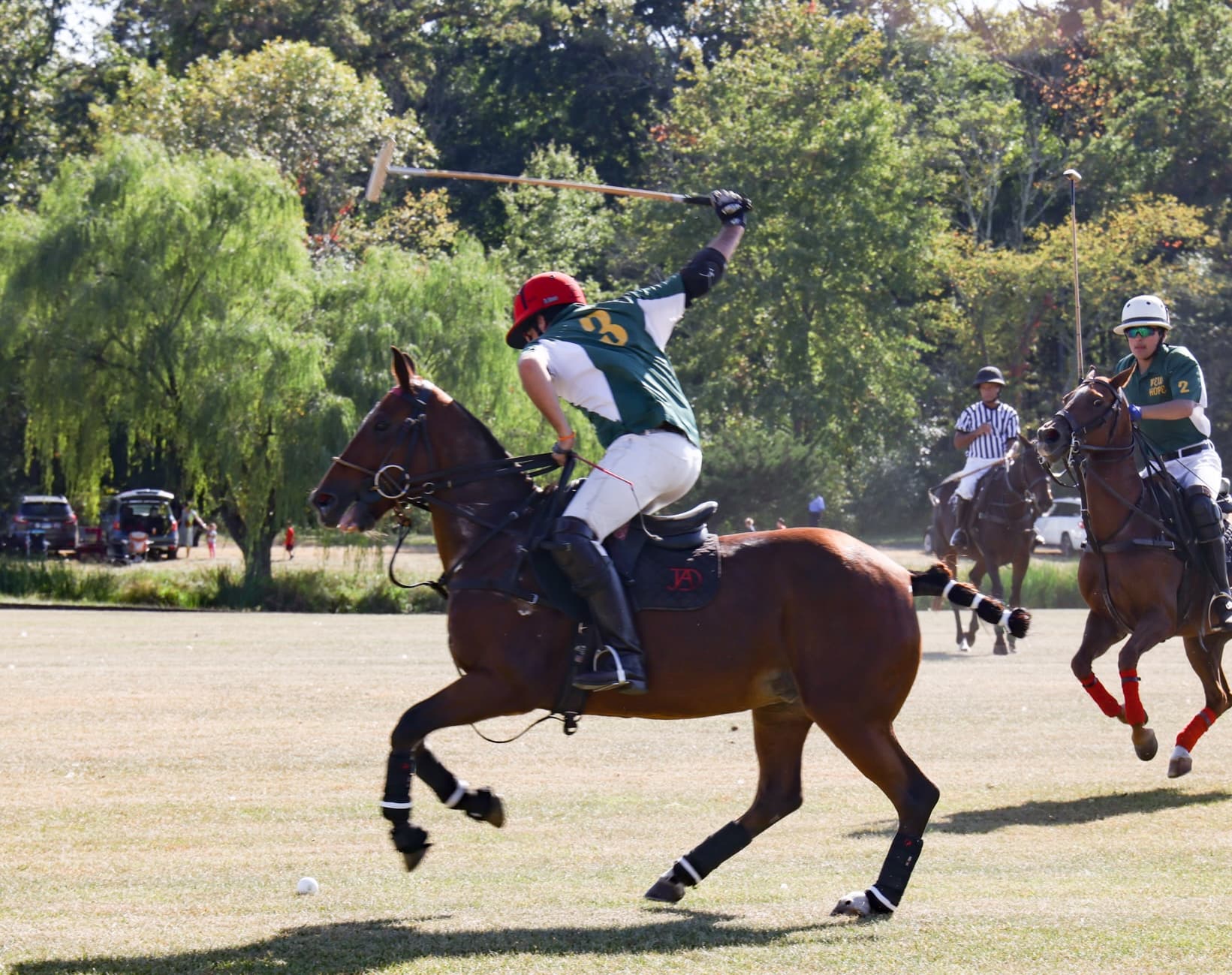
Offside Backhand
A backward stroke made on the rider's right side. It is used to redirect the ball, defend, or send the play back toward teammates.
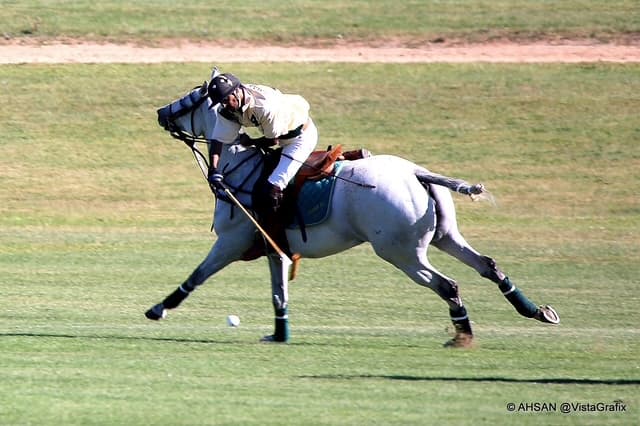
Nearside Forehand
A forward stroke made across the horse on the rider's left side. It requires balance, control, and careful body position.
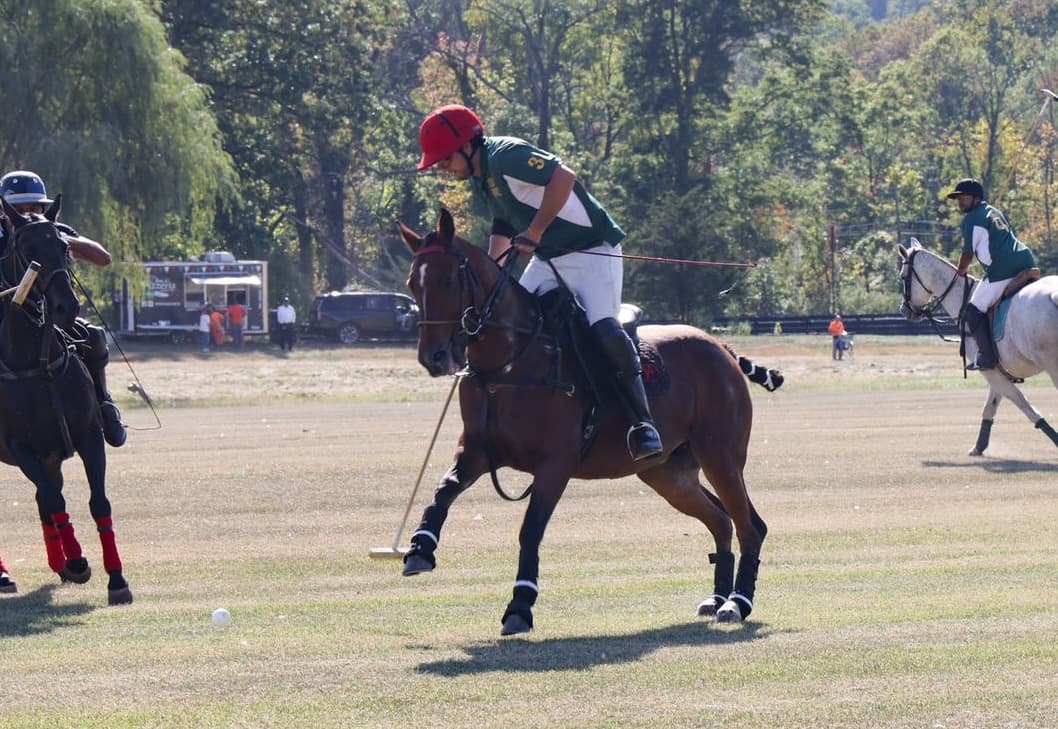
Nearside Backhand
A backward stroke made on the rider's left side. It is a useful defensive stroke and helps riders control play from both sides of the horse.
Advanced strokes come later.
As riders progress, they may also learn more advanced shots, including under-the-neck and tail shots. These are introduced gradually after the rider has developed balance, control, and confidence with the basic strokes.
From first lesson to open-field confidence.
At Shannon Hill Polo Club, new riders are introduced to polo gradually. Instruction begins with horsemanship, balance, and mounted control before progressing into mallet work, stick-and-ball practice, arena play, and eventually open-field polo.
The goal is not only to teach the rules of the game, but to help each rider understand the horse, the rhythm of the sport, and the confidence needed to play safely and well.
Start Learning Polo